
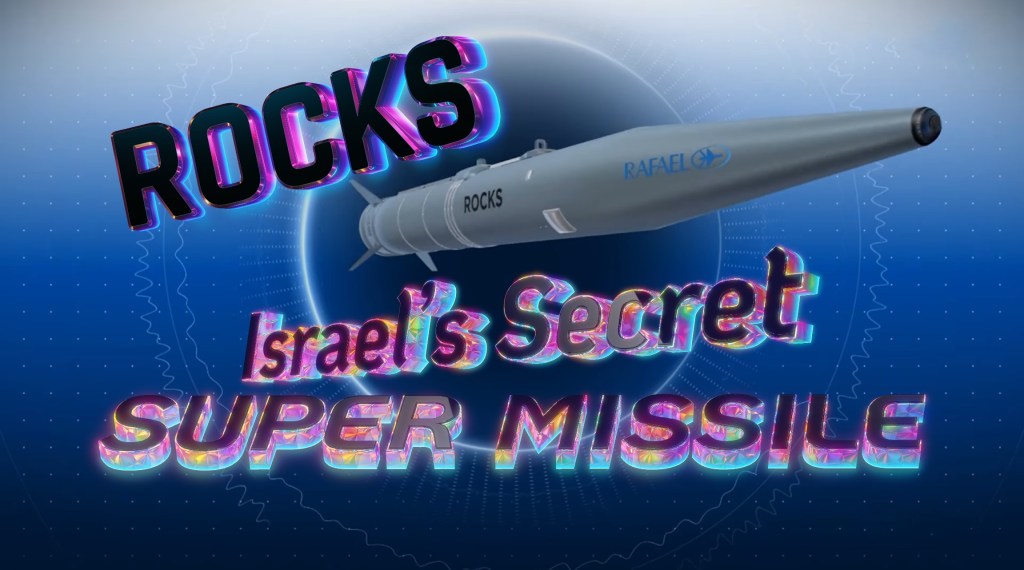
Israel’s Defense Establishment has long preferred Weapons that combine Range, Precision, and Ambiguity. Few Systems illustrate that better than ROCKS, Rafael Advanced Defense Systems’ Extended Stand-Off Air-to-Surface Missile. Publicly, it is presented as a Next-Generation Precision Strike Weapon designed to let Israeli Aircraft hit Important Targets from a Safe Distance. Privately, it likely sits among the more Sensitive Tools in Israel’s Arsenal — the kind of Weapon whose True Value is measured not only by what it can strike, but by what it allows Israel to do without exposing Pilots, Platforms, or Doctrine.
Article Continues Below Picture
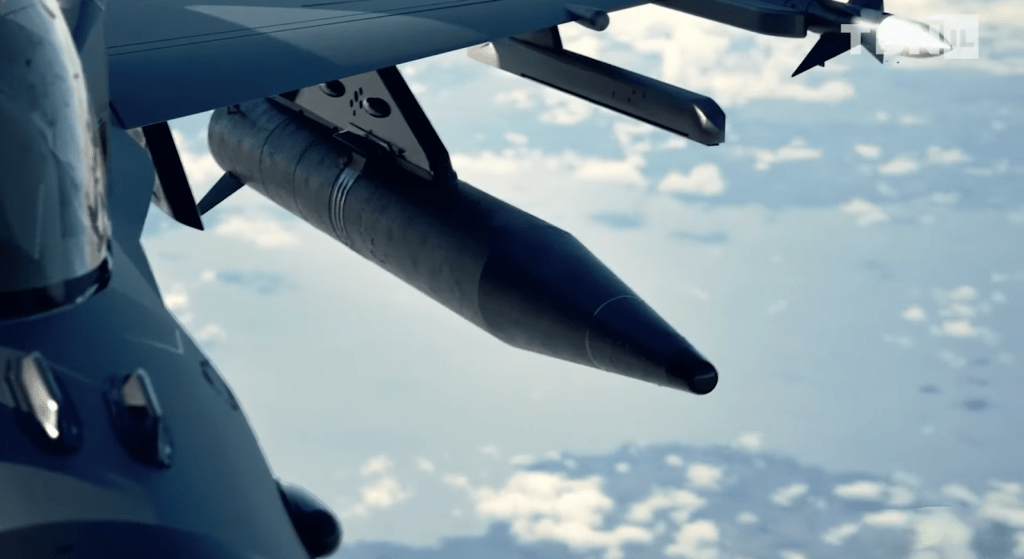
What is known is straightforward enough. Rafael describes ROCKS as a Next-Generation Extended Stand-Off Air-to-Surface Missile, built for pinpoint Accuracy and day/night, all-weather Operations. The System is intended for Deep Precision Attack from Standoff Range, giving the Israeli Air Force a Tool that can be used against High-Value Targets without needing to fly directly into the densest Layers of Enemy Air Defense. According to Rafael’s official Specifications, ROCKS incorporates Advanced Technologies inherited from the legacy Popeye and SPICE Air-to-Surface Weapons — two Systems with Extensive Combat Histories in Israeli Service. The Missile can be equipped with either a Penetration Warhead or a Blast Fragmentation Warhead, making it effective against both Above-Ground Targets and heavily fortified Underground Facilities.
Technical Specifications and Capabilities
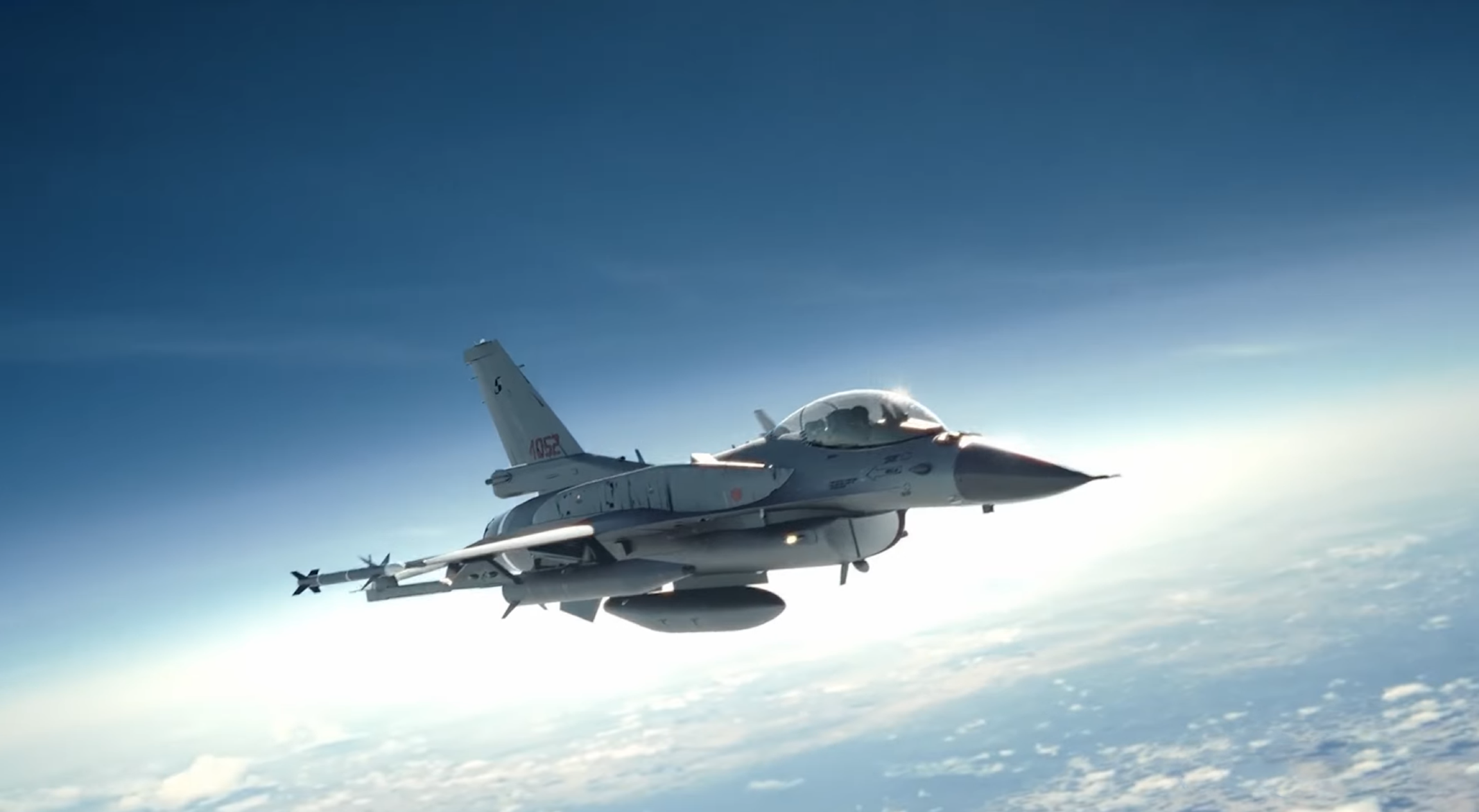
The CSIS Missile Threat Project, drawing on Reporting from Jane’s and Globes, provides additional Detail. ROCKS travels faster than Mach 1 and was unveiled at the Aero India Show in Bangalore in February 2019. At that Time, Rafael Representatives indicated the Missile was at Technical Readiness Level 8 — meaning full-scale Development and Testing were essentially complete, with only the final Phase remaining. The System is certified on the Israeli Air Force’s F-16I Sufa Multirole Combat Aircraft, though Compatibility with other Platforms has been speculated in subsequent Years.
The Guidance Architecture is particularly noteworthy. ROCKS uses Inertial Navigation System (INS) and Global Positioning System (GPS) for Midcourse Navigation, then transitions to an Advanced Electro-Optical Seeker (EOS) combined with Anti-Radiation Homing for the Terminal Phase of Flight. This Dual-Mode Approach enables Operation in GPS-Denied Environments — a Critical Consideration given that Iran and its Proxies have invested heavily in Electronic Warfare and GPS Jamming Capabilities. The Scene-Matching Algorithm, borrowed from Rafael’s SPICE Family, allows Automatic Target Acquisition — using AI Systems — comparing Live Imagery to Pre-Loaded Topographic Data, overcoming Navigation Errors and Target Location Errors that would defeat Lesser Systems.
Fact Box 1
| Specification | ROCKS Missile | Air LORA Missile |
|---|---|---|
| Developer | Rafael Advanced Defense Systems | Israel Aerospace Industries (IAI) |
| Range | Approximately 300 Kilometers (188 Miles) | Over 400 Kilometers (250 Miles) |
| Length | Not specified | Not specified |
| Weight | Not specified | Not specified |
| Warhead Weight | Not specified | Not specified |
| Warhead Types | Penetration Warhead (“Bunker Buster” Underground Targets) or a Blast Fragmentation Warhead (Above Ground, Anti-Personnel / High Value Technical Targets) | Multi. Not specified. |
| Guidance System | Scene-matching and Passive Radar Homing | Jam-resistant GPS-Inertial Guidance |
| Accuracy (CEP) | Highly Accurate. Not specified. | 10 Meters (33 Feet) |
| Speed | Supersonic (Partially Hypersonic?) | Supersonic |
| Base System | Based on Black Sparrow Ballistic Target Missile | Air-launched Variant of Surface-to-surface LORA Artillery Rocket |
| Operational Status | Combat-Proven Technologies | Unveiled in June 2024 at ILA Berlin Air Show |
What ROCKS is For
In public Descriptions, ROCKS is a Precision Strike Weapon meant to attack High-Value Targets from outside the Reach of Many Point-Defense Systems. In practical Terms, that means
- Infrastructure
- Hardened Facilities
- Command Bunkers
- Weapons Depots
and other Targets where Accuracy and Survivability matter more than sheer Explosive Yield.
The Appeal is obvious. A Standoff Missile can shorten Planning Complexity, reduce Exposure to Threats, and preserve the Flexibility that Air Power gives Israel. It can also give Policymakers another Option between symbolic Retaliation and Full-Scale Escalation — a Critical Gradient in the Spectrum of Force that Israel has refined over Decades of asymmetric Conflict.
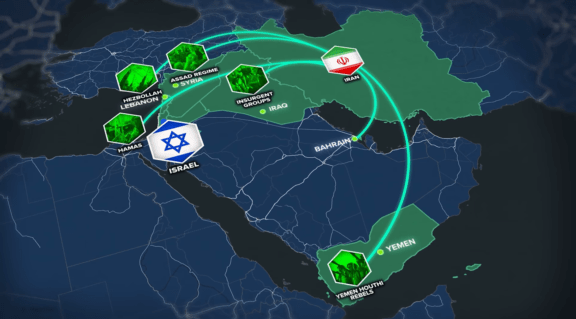
That makes ROCKS especially relevant in a regional Environment shaped by Iran and Iran-backed Groups in Lebanon, Yemen, Syria, and Gaza. Israel has repeatedly shown an Interest in having Strike Options that are fast, precise, and difficult to intercept. ROCKS fits that Pattern neatly. Its Ability to engage both stationary and relocatable Targets — above and below Ground — makes it a versatile Tool against an Enemy Network that disperses, hides, and hardens its Assets at every Opportunity.
Article Continues Below Picture
The October 2024 Leak: ROCKS Enters the Public Conversation
A significant Development in the public Profile of ROCKS came in October 2024, when US Intelligence Documents leaked online allegedly described Israel’s Plans for Retaliation against Iran following Tehran’s Ballistic Missile Barrage of October 1. Among the Weapons mentioned in those Documents were Missiles dubbed “Golden Horizon” and “ROCKS” — both thought to refer to domestically produced Air-Launched Ballistic Missiles, or ALBMs.
The Leak marked the first known public Mention of the Golden Horizon System, which Speculation has linked to either the Air LORA — an ALBM made by Israel Aerospace Industries with a Range of over 400 Kilometers — or the Blue Sparrow ALBM, also from Rafael, with a reported Range of some 2,000 Kilometers. ROCKS, with its approximate 300-Kilometer Range, represents the shorter-legged but potentially more numerous Component of this Strike Triad.
The Significance of the Leak cannot be overstated. For the first Time, an authoritative Source — albeit an unauthorized one — placed ROCKS explicitly within Israel’s operational Planning for Strikes against Iran. This did not confirm Use, but it confirmed Intent and Capability in a Way that Rafael’s marketing Materials never could.
Fact Box 2
Leaked U.S. Intelligence Documents (October 2024)
According to leaked U.S. Intelligence Documents from October 2024, Israel was developing two Air-Launched Ballistic Missile Systems designated as “Golden Horizon” and “ROCKS”. These Documents, allegedly attributed to the National Geospatial-Intelligence Agency (NGA) and the National Security Agency (NSA), provided Specific Details about Israel’s Preparations for potential Strikes against Iran.
The leaked Documents revealed that the Israeli Air Force had handled at least 16 Golden Horizon ALBMs ALBM — (ALBM — Air Launched Ballistic Missile) and at least 40 ROCKS ALBMs since October 8, 2024. The Documents also noted that three possible Golden Horizon ALBM-Associated Dollies had arrived at a separated Hardened Aircraft Shelter adjacent to the F-15I Alert HAS Complex.
The Documents from the NSA indicated that the Israeli Air Force continued Long-Range Air-Launched Ballistic Missile Handling on October 16, 2024. These Documents were reportedly received through an Anonymous Source on Telegram on October 18, 2024. Needless to say, this leak should be found. It may very well be that this was leaked on purpose. But what good would this leak really do, except make the Iranians expand their underground Bunker Complexes to avoid being hit by these Super Missiles?
The Leak marked the first known Public Mention of the Golden Horizon System, which has been speculated to be either the Air LORA or the Blue Sparrow ALBM. The Blue Sparrow, with a Range of about 2,000 Kilometers, was developed to simulate Iraqi Scud and Iranian Shahab Missiles for testing the Arrow Interceptor System.
The Documents revealed Israel’s Integration of these Weapons into its operational Planning, suggesting that these ALBMs were being prepared for potential Use against Iranian Targets. The Timing of these Preparations coincided with Escalating Tensions between Israel and Iran following Iran’s Ballistic Missile Barrage on October 1, 2024.
The Choice of ALBMs was strategic as it enabled Israeli Jets to strike from far Away Distances, likely from Iraqi Airspace, which complicated Iran’s Efforts to intercept these fast-moving Threats. Initial Signs of Israel’s Strategy surfaced shortly after the Attack, with Images on Social Media revealing Debris of Israeli Missile Boosters that had fallen in Iraq, pointing to the cross-border Operation’s Technical Details.
The Question Everyone Asks: Has Israel Used It?
That is where Public Evidence becomes thin — but not entirely absent.
After reviewing Public Sources, no publicly confirmed Instance exists in which Israel has explicitly stated it used ROCKS against Targets inside Iran, Hezbollah in Lebanon, the Houthis in Yemen, Hamas in Gaza, or other Iranian Proxies. Israel does not typically announce the specific Munition used in every Strike, especially when the Weapon is part of a sensitive Strike Portfolio.
However, the Context demands Attention. Israel’s October 26, 2024 Strike on Iranian Military Sites came weeks after Iran lobbed hundreds of Ballistic Missiles toward the only Western, Democratic State in the Middle East. The Times of Israel reported that preparing a long-range Retaliatory Strike with Fighter Jets is a complex Process requiring International-level Coordination, Solutions for Refueling, and the Operation of Communication, Rescue, and Intelligence Systems — Preparation that can take significant Time. Experts pushing for increased Use of Long-Range Arms have argued that had Israel employed Precision Ballistic Missiles, the Response could have occurred within approximately one Hour. Cruise Missiles could have reduced Response Times to three or four Hours.
Article Continues Below Picture
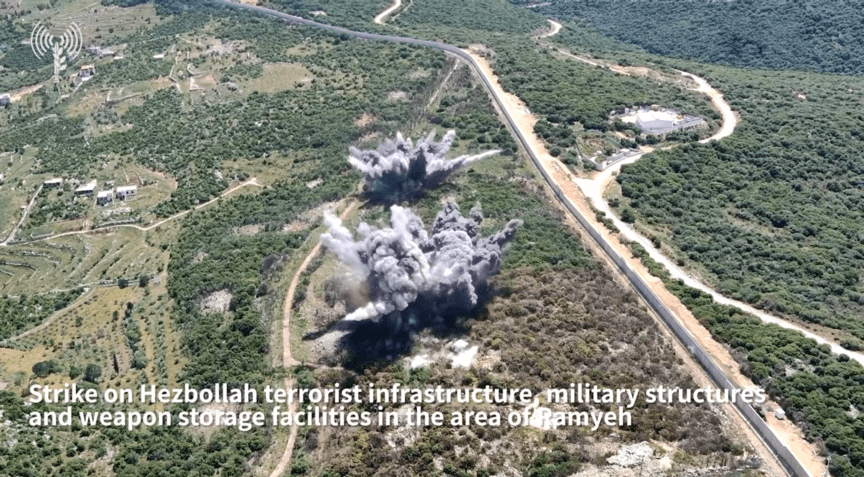
The fact that Israel chose the slower Air-Power Route does not mean ROCKS was excluded from the Mission Package. ALBMs like ROCKS are, by Definition, air-launched — meaning they can be employed during a standard Fighter Jet Strike without the Delays associated with ground-based Launch Preparation. The Missile leaves the Aircraft at Standoff Range, then proceeds autonomously to the Target. This allows the F-16I or other Platforms to release Ordinance well outside the Engagement Envelope of Iranian Air Defenses, including the Russian-supplied S-300 and most likely, also S-400 Systems that Tehran has acquired.
In other Words, ROCKS may well have been used — but Israel’s Operational Secrecy and the Nature of Standoff Warfare make Attribution virtually impossible from open Sources.
Why the Ambiguity Matters
This kind of Ambiguity is not accidental. For Israel, the Value of a Weapon like ROCKS lies partly in the Uncertainty it creates. If an Adversary cannot confidently identify which Munition was used, it becomes harder to model Israel’s Inventory, predict its Tactics, or understand its remaining Capacity.
That Uncertainty also extends to Stockpiles — and to the broader Question of how Israel allocates Resources between Air Power and Missile Power.
How Many Does Israel Have?
No credible public Source gives a hard Number for Israel’s ROCKS Stockpile. This is not unusual. Israel does not publicly disclose Inventories of High-End Strike Munitions, and for good Reason. If these Weapons are part of a Deep Strike Toolkit, then the Size of the Stockpile is itself a Strategic Secret.
What can be said with any degree of Accuracy is more limited:
—There is no publicly confirmed Stockpile Figure; any Estimate would be speculative; and the Weapon likely belongs to a sensitive, operationally important Category of Systems that Israel is unlikely to discuss openly.
If one reads the public Reporting carefully, the safest Inference is that ROCKS is important but not abundant — not because any Source states that directly, but because Weapons of this Type are usually controlled, High-Value Systems rather than mass-issued Munitions. The Production Rate, the Cost per Unit, and the Allocation to specific Squadrons would all be classified at the highest Levels of the Israeli Defense Ministry.
The Air-versus-Ground Missile Debate
ROCKS also tells a broader Story about where Israel’s Defense Thinking is headed — and about the internal Politics of that Debate.
For Decades, Israel has invested heavily in Air Superiority, Intelligence, Precision Targeting, and Layered Missile Defense. But the modern Threat Environment — especially Iran’s Missile Force and the regional Reach of Iranian Proxies — pushes Israel to think in Terms of fast Retaliation, long-range Precision, and Platform Survivability.
The Times of Israel Reporting reveals a persistent Tension within the IDF. In 2018, then-Defense Minister Avigdor Liberman announced that the Army would establish a Missile Corps independent of the Air Force, intended to be integrated into the IDF’s Ground Forces. The Plan, never realized, allocated $500 Million to create a System utilizing Precision Ground-Launched Missiles with Ranges of up to 300 Kilometers. Critics argued that establishing a Missile Corps under this Proposal would require duplicating Intelligence Systems, Target Management, Command Structures, and related Systems — effectively creating Redundancies within the IDF.
Air Force Boosters argue that Ground-Based Launch Systems are one-dimensional, with a single Purpose, while Fighter Jets are more versatile Platforms, capable of taking on repeat Missions ranging from Intelligence Gathering to carrying out Strikes with various Munitions, and even Aerial Combat. Opponents counter that sending Aircraft on Missions risks losing Pilots, Navigators, and the Planes themselves if they are shot down.
ROCKS represents a Compromise Position in this Debate. As an Air-Launched System, it preserves the Air Force’s institutional Primacy while delivering Missile-like Standoff Capability. It does not require a separate Command Structure, does not duplicate Intelligence Assets, and does not demand the massive Infrastructure Investment that a Ground-Based Missile Fleet would entail. In Effect, ROCKS gives Israel the Benefits of Missile Strikes without the Organizational Cost.
Fact Box 3 — Rafael Advanced Defense Systems Ltd.
Rafael Advanced Defense Systems Ltd. is Israel’s second-largest defense company, founded in 1948 as the Science Corps (HEMED) before being incorporated as a Limited Company in 2002.
Headquartered in Haifa, it designs, develops, manufactures and supplies Advanced Defense Systems for Air, Land, Sea, and Space Applications, with approximately 7,000-8,000 Employees. The Company is renowned for developing Battle-proven Systems like the Iron Dome Air Defense System, Trophy Active Protection System, SPICE Guidance Kits, Spike Anti-Tank Missiles, and the ROCKS Extended Stand-Off Missile.
While remaining State-owned, the Israeli Government announced Plans in January 2026 to partially privatize Rafael through an IPO on the Tel Aviv Stock Exchange, offering a 25-30% Minority Stake while maintaining State Control. With 2021 Sales reaching $3 billion and $4.7 billion in Orders, Rafael serves both the Israeli Defense Forces and International Customers across the Americas, Europe, Middle East, Africa, and Asia.
The Iranian Threat and the Strategic Calculus
To understand the Importance of ROCKS, one must understand the Nature of the Enemy. Iran is not a conventional Adversary content to sit within its Borders. The Islamic Dictatorship has spent Decades building a Network of Proxy Forces — Hezbollah in Lebanon, the Houthis in Yemen, various Militias in Syria and Iraq, and Hamas and Palestinian Islamic Jihad in Gaza — all armed, funded, and directed by Tehran’s Islamic Revolutionary Guard Corps. This Network surrounds Israel on multiple Fronts, creating what Iranian Strategists have called a “Ring of Fire.”
Iran itself has developed the largest and most diverse Ballistic Missile Arsenal in the Middle East, with Systems ranging from short-range Battlefield Weapons to intermediate-range Missiles capable of striking any Target in Israel. The October 1, 2024 Attack — in which Iran launched hundreds of Ballistic Missiles at Israel — demonstrated both the Scale and the Willingness to use this Arsenal in direct Confrontation. While Iran’s Accuracy and Effectiveness have been inconsistent, Technological Advances could improve the Precision of its Missiles over Time.
Hezbollah possesses an estimated 150,000 Rockets and Missiles, including Precision-Guided Munitions capable of striking critical Infrastructure anywhere in Israel. The Houthis have demonstrated the Ability to launch Drones and Missiles at Israel from 2,000 Kilometers away. This is not a Threat Environment that tolerates Delay or Imprecision in Response.
Why ROCKS Matters for Israel’s Survival
Against this Backdrop, ROCKS is not merely a useful Tool — it is a Component of Israel’s Survival Architecture. Several Factors elevate its Strategic Importance:
First, Speed of Response. The Times of Israel Reporting makes clear that Air-Based Retaliation using traditional Strike Packages can take Weeks to plan and execute. In a Crisis where Israel absorbs a major Missile Barrage, the Political and Military Pressure to respond within Hours rather than Days is immense. ROCKS, already loaded on F-16I Aircraft maintained at high Readiness, can be launched with minimal Preparation. The Pilot allocates the Mission before Release — including Target Type, Coordinates, Impact Angle, Azimuth, Topographic Imagery Data, and Fuse Delays — and the Missile handles the rest autonomously.
Second, Survivability of Platforms and Pilots. Iran has invested heavily in advanced Russian Air Defense Systems. Flying manned Aircraft into the densest Layers of these Defenses risks Catastrophic Losses. ROCKS allows Israeli Fighters to release their Payload from Standoff Range — outside the Engagement Envelope of most Surface-to-Air Threats — and return safely. This preserves both the Aircraft and, more importantly, the highly trained Pilots who cannot be quickly replaced.
Third, GPS-Independent Operation. In any major Conflict with Iran, GPS Jamming and Spoofing would be a certainty. Iran has demonstrated these Capabilities repeatedly. ROCKS’ Dual-Mode Guidance — combining Electro-Optical Scene Matching with Anti-Radiation Homing — means it can find its Target even when Satellite Navigation is denied. This is not a theoretical Concern; it is a near-certainty in any and all Confrontations with Iran.
Fourth, Hard-Target Penetration. Much of Iran’s Nuclear Infrastructure — the Fordow Enrichment Facility, the Natanz Complex, and various Military Installations — is buried deep underground, protected by layered Defenses. ROCKS’ Penetration Warhead and Impact Angle Control make it suitable for attacking such Targets, especially when delivered in Salvos that can sequentially breach layered Defenses.
Fifth, Deniability and Ambiguity. In the murky Realm of the Shadow War between Israel and Iran, the Ability to strike without revealing How or With What is a Strategic Asset. ROCKS’ Standoff Nature means Launch Platforms may never enter Radar Coverage of the Target Area. The Strike appears from nowhere, Attribution is difficult, and Israel can maintain its long-standing Policy of Strategic Ambiguity.
Article Continues Below Picture
The Broader Strategic Picture
ROCKS also fits within a larger Evolution in Israeli Military Doctrine. The Experience of the 2023-2026 War Cycle — encompassing the Gaza Conflict, the Hezbollah Confrontation, the direct Exchange with Iran, and the Houthi Threat — has forced a Reassessment of Assumptions that held for Decades.
Yair Ramati, a former Head of the Defense Ministry Arm responsible for developing the Arrow and other Missile Systems, told The Times of Israel that a fundamental Crisis like the current War necessitates revisiting Assumptions. He recalled that Israel’s Ground Forces Branch was organized in the early 1980s following Shifts in Strategic Thinking in the wake of the 1973 Yom Kippur War. “Even then, there was a Need for organizational and conceptual Renewal, and the same is true today,” he said.
Tal Inbar, a senior Research Fellow at the Missile Defense Advocacy Alliance, noted that there was Resistance in the past to Iron Dome and Drones, and today People take Pride in their Longevity and Effectiveness. “Some Air Force Missions could be replaced by Missile Strikes at Ranges of hundreds of Kilometers,” Inbar observed. “Today’s Technology has advanced significantly, allowing for precise Strikes that were not possible in the past.”
ROCKS exists at the Intersection of these two Perspectives — preserving the Air Force’s Role while delivering Missile-Class Standoff Capability. It is, in many Respects, the Bridge between Israel’s past Doctrine and its future Requirements.
Comparison with Peer Systems
To fully appreciate ROCKS’ Place in the Arsenal, it is worth comparing it with peer Systems. The Air LORA, produced by Israel Aerospace Industries, offers greater Range — over 400 Kilometers — and is based on a Ground-Launched Design adapted for Air Launch.
The Blue Sparrow, with its 2,000-Kilometer Range, represents the extreme End of Israel’s Air-Launched Reach. Both Systems have their Niches, but ROCKS’ 300-Kilometer Range covers the most operationally relevant Distances for the majority of high-value Targets in the Levant and the Eastern Mediterranean.
Internationally, ROCKS occupies a similar Category to the European TAURUS KEPD 350 and the Anglo-French Storm Shadow/SCALP — both Air-Launched Cruise Missiles with Standoff Ranges in the 300-500 Kilometer Bracket. However, ROCKS’ Ballistic Trajectory and Mach-1+ Speed differentiate it from these Subsonic Cruise Missiles, offering shorter Time-to-Target and a different Intercept Challenge for Enemy Air Defenses.
Bottom Line
ROCKS is a real Rafael Weapon System and an important Part of Israel’s Long-Range Precision Strike Conversation. Public Sources identify it as a Stand-Off Air-to-Surface Missile designed for Pinpoint Attacks at Range, with Combat-Proven Technologies inherited from the Popeye and SPICE Lineage. The October 2024 US Intelligence Leak placed it squarely within Israel’s operational Planning against Iran — the strongest public Indication that it has moved from Development to Active Consideration for the most demanding Missions.
On the key Questions — whether Israel has used it against Iran or Iranian Proxies, and how large Israel’s Stockpile may be — the public Record remains silent. That Silence is itself revealing. In Israeli Defense Policy, some of the most important Systems are the ones the World hears about only in Fragments. ROCKS appears to be one of them.
For Israel, facing an Iranian Regime whose stated Goal is the Destruction of the Jewish State, whose Proxy Network encircles it on every Front, and whose Missile Arsenal grows more capable each Year, Weapons like ROCKS are not optional Accessories. They are essential Components of the Deterrence and Strike Architecture that allows a small Nation to survive in a Hostile Region.
The Ability to strike deep, strike precisely, strike quickly, and strike without warning is not merely a military Advantage — it is a Survival Imperative. ROCKS, quietly and without fanfare, contributes to that Imperative in Ways that may never be fully known outside the Classified Briefing Rooms of the IDF.
BREAKING: IDF’s SECRET STRIKE? Cutting Edge, Air-Launched BALLISTICS Strike IRAN | TBN Israel
Sources
Rafael Advanced Defense Systems — ROCKS Official Page
CSIS Missile Threat — “Rafael Unveils Stand-Off ‘Rocks’ Missile”
Globes — “Rafael Unveils Long-Range ROCKS Air-to-Surface Missile”



Leave a Reply